
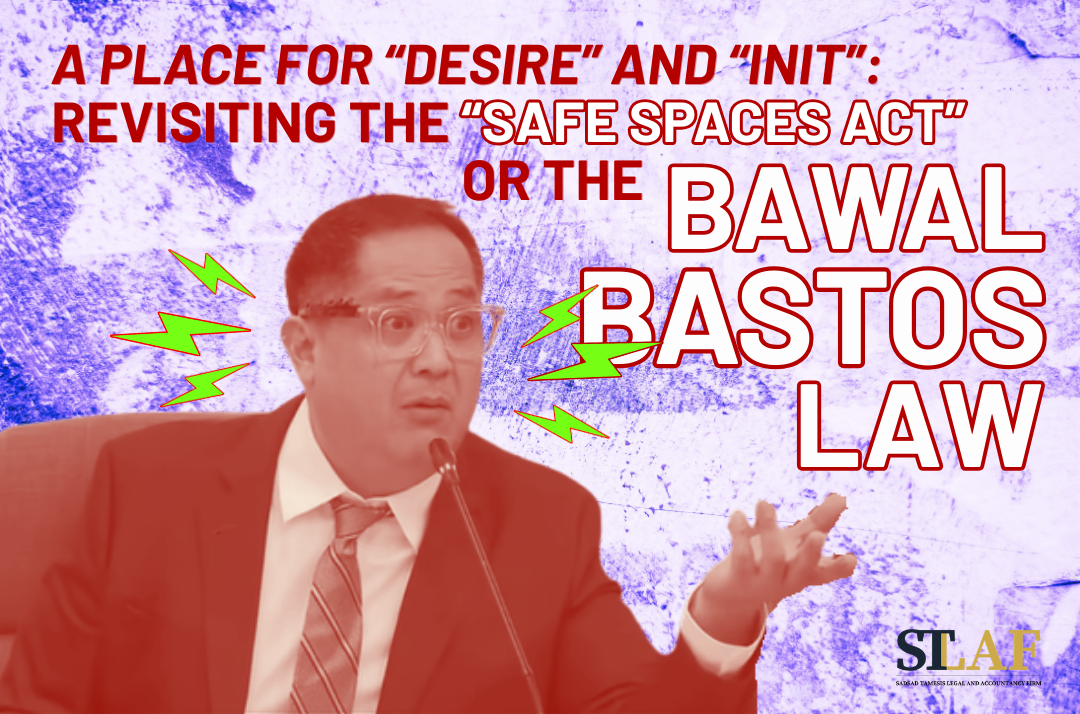
In recent developments, Quezon City 4th District Rep. Bong Suntay has been condemned by various lawmakers, human rights groups, and the general public for his obscene remarks about a public figure, made in an attempt to draw an analogy during a hearing on impeachment complaints against Vice President Sara Duterte last Tuesday.
“Minsan nasa Shangri-La ako, nakita ko si Anne Curtis. Ang ganda-ganda pala niya. You know, may desire sa loob ko na nag-init talaga, at na-imagine ko na lang kung ano ang puwedeng mangyari. Pero siyempre hanggang imagination lang ’yon,” were Suntay’s exact words.
(“Last time, I was in Shangri-La, and I saw Anne Curtis. She was very beautiful. You know, a desire within me really welled and heated up, and I imagined what could’ve happened. But of course, it was only [up to] my imagination.”)
In the grand year 2026 and during the National Women’s Month celebration, many understandably expressed their vitriol against this Congressman—a person who holds public trust and authority—saying such things on live television and doubling down thereafter. Many question what would compel a policymaker to do it and why he would not know the local laws pertaining tothe very act he did—gender-based harassment, and in this case, by the sexual comment he made.
This one incident out of many only underscores the ongoing struggle in combating misogyny in our everyday lives and spaces, and the relevance of our laws that tackle this societal issue. One of these laws is the Republic Act (RA) No. 11313, otherwise known as the Safe Spaces Act or the Bawal Bastos law.
What is the Safe Spaces Act (Bawal Bastos Law)?
Signed into law in 2019, the Safe Spaces Act or the Bawal Bastos Law aims to define and punish catcalling and other forms of gender-based sexual harassment (GBSH).
Its Declaration of Policy states that it “recognizes that both men and women must have equality, security and safety not only in private, but also on the streets, public spaces, online, workplaces and educational and training institutions.”
Under the Safe Spaces Act, GBSH is classified into:
- Gender-based Streets and Public Spaces Sexual Harassment (Article I)
- Gender-Based Online Sexual Harassment (Article II)
- Gender-Based Sexual Harassment in Workplaces (Article IV)
- Gender-Based Sexual Harassment in Educational and Training Institutions (Article V)
Gender-based Streets and Public Spaces Sexual Harassment
The crimes under this classification are committed through any unwanted and uninvited sexual actions or remarks against any person regardless of the motive for committing such action or remarks (Sec. 4). They include:
- catcalling, wolf-whistling, unwanted invitations,
- misogynistic, transphobic, homophobic and sexist slurs,
- persistent uninvited comments or gestures on a person’s appearance,
- relentless requests for personal details,
- statement of sexual comments and suggestions,
- public masturbation or flashing of private parts, groping, or any advances, whether verbal or physical, that are unwanted and have threatened one’s sense of personal space and physical safety
| ‘Verbal’ GBSH | |
| 1st offense | Twelve (12) hours community service inclusive of Gender Sensitivity Training (GST) and PHP 1,000 fine |
| 2nd offense | Imprisonment of 6 -10 days or PHP 3,000 fine |
| 3rd offense | Imprisonment of 11 – 30 days and PHP 10,000 fine |
| ‘Gestural and ‘Demonstrated’ GBSH | |
| 1st offense | Twelve (12) hours community service inclusive of GST and PHP 10,000 fine |
| 2nd offense | Imprisonment of 11 – 30 days or PHP 15,000 fine |
| 3rd offense | Imprisonment of 1 month and 1 day to 9 months and PHP 20,000 fine |
| GBSH through stalking, and physical advances such as any touching, pinching, or brushing against the genitalia | |
| 1st offense | Imprisonment of 11 – 30 days or a fine of PHP 30,000 provided that it includes attendance in a GST to be conducted by PNP in coordination with LGU and PCW |
| 2nd offense | Imprisonment of 1 month and 1 day to 6 months or PHP 50,000 fine |
| 3rd offense | Imprisonment of 4 months and 1 day to 6 months or PHP 100,000 fine |
| Additional if the perpetrator is a driver or operator of a PUV |
| Cancellation of license of the driver by the Land Transportation Office (LTO) |
| Suspension or revocation of franchise by the Land Transportation Franchising and Regulatory Board (LTFRB). This sanction may be imposed upon order by the proper court OR upon order of LTO/LTFRB in an administrative proceeding |
| If the perpetrator is a minor |
| The Department of Social Welfare and Development (DSWD) shall take necessary disciplinary measures as provided for under Republic Act No. 9344, otherwise known as the “Juvenile Justice and Welfare Act of 2006″. |
Where can victims of GBSH in streets and public spaces reach out for help?
| In all cases | Local Government Unit via local Anti-Sexual Harassment (ASH) hotlineNearest police precinct through their Women and Children’s Protection DesksLocal Social Welfare and Development OfficePublic Attorney’s Office subject to PAO’s Persons Qualified for Legal Assistance |
| Streets, roads, alleyways, parks | Local traffic enforcer |
| PUVs by a driver or operator of PUV | Local Traffic Enforcer, LTO, LTFRB |
| Close proximity to the LGU Hall | Anti-Sexual Harassment (ASH) Desk Officer of the LGU (Provincial, Municipal, City, or Barangay) |
| Malls, Bars, Public Establishments | ASH Officer designated by operator of Malls, Bars, Public Establishments(e.g. security officers) |
Gender-Based Online Sexual Harassment
The crimes under this classification include acts that use information and communications technology in terrorizing and intimidating victims through:
- physical, psychological, and emotional threats;
- unwanted sexual, misogynistic, transphobic, homophobic, and sexist remarks and comments online, whether publicly or through direct and private messages;
- invasion of the victim’s privacy through cyberstalking and incessant messaging, uploading and sharing without the consent of the victim;
- any form of media that contains photos, voice, or video with sexual content, any unauthorized recording and sharing of any of the victim’s photos, videos, or any information online;
- impersonating identities of victims online or posting lies about victims to harm their reputation, or filing false abuse reports to online platforms to silence victims.
| In general | Corrective prison (prision correccional) in its medium period or a fine of not less than PHP 100,000.00 but not more than PHP 500,000.00, or both, at the discretion of the court |
| If the perpetrator is a juridical person | License or franchise shall be automatically deemed revoked, and the persons liable shall be the officers thereof, including the editor or reporter in the case of print media, and the station manager, editor and broadcaster in the case of broadcast media |
| If the perpetrator is a foreigner (alien) | Subjected to deportation proceedings after serving sentence and payment of fines. |
Where can victims of online GBSH reach out for help?
The PNP Anti-Cybercrime Group (PNPACG) as National Operational Support Unit of the PNP, in collaboration with the Department of Information and Communications Technology (DICT), is responsible for the implementation and enforcement of Philippine laws on cybercrime. They receive complaints about GBSH and develop online mechanisms for reporting real-time online GBSH and apprehending the perpetrators.
Victims can file a complaint directly with the National Bureau of Investigation (NBI) through PNPACG, or the Office of the Cybercrime (OOC) of the Department of Justice (DOJ).
Gender-Based Sexual Harassment in Workplaces
GBSH in the workplace setting includes the following:
- act or series of acts involving any unwelcome sexual advances, requests or demand for sexual favors or any act of sexual nature, whether done verbally, physically or through the use of technology such as text messaging or electronic mail or through any other forms of information and communication systems, that has or could have a detrimental effect on the conditions of an individual’s employment or education, job performance or opportunities;
- conduct of sexual nature and other conduct-based on sex affecting the dignity of a person, which is unwelcome, unreasonable, and offensive to the recipient, whether done verbally, physically or through the use of technology such as text messaging or electronic mail or through any other forms of information and communication systems; and
- conduct that is unwelcome and pervasive and creates an intimidating, hostile or humiliating environment for the recipient (the crime may be committed between peers and those committed to a superior officer by a subordinate, or to a teacher by a student, or to a trainer by a trainee)
It is important to note that sexual harassment in the workplace is also and was firstly covered by the Republic Act No. 7877, or the Anti-Sexual Harassment Act of 1995, and the Safe Spaces Act acts as a bridge to fill in the gaps of the former law.
Offenders and any person who violates the RA 7877 is subject to the penalty of imprisonment of not less than one (1) month nor more than six (6) months, or a fine of not less than PHP 10,000 nor more than PHP 20,000, or both such fine and imprisonment at the discretion of the court.
Likewise, under the Safe Spaces Act, employers have the responsibility to:
- disseminate or post in a conspicuous place a copy of the law to all persons in the workplace;
- provide measures to prevent GBSH in the workplace, such as the conduct of anti-sexual harassment seminars;
- create an independent internal mechanism or a committee on decorum and investigation (CODI) to investigate and address complaints of gender-based sexual harassment;
- develop and disseminate, in consultation with all persons in the workplace, a code of conduct or workplace policy (Sec. 32. Development of Code of Conduct, RA 11313 IRR) which shall:
- Expressly reiterate the prohibition on gender-based sexual harassment;
- Describe the procedures of the internal mechanism;
- Set administrative penalties.
| Failure to implement their duties | Fine of not less than PHP 5,000 but not more than PHP 10,000 |
| Non-action on reported acts of GBSH | Fine of not less than PHP 10,000 but in their workplace not more than PHP 15,000 |
Where can victims of GBSH in the workplace setting reach out for help?
Under the Safe Spaces Act, a victim can file an administrative complaint with the CODI and/or file a civil and/or criminal case before the courts.
Likewise, under RA 7877, victims in the government sector can reach the Civil Service Commission (CSC) and those in the private sector can reach the Department of Labor and Employment (DOLE) Bureau of Working Conditions), PNP Women and Children Protection Center, NBI Anti-Violence Against Women and Children Desk, and the DOJ – Public Attorney’s Office (DOJ-PAO).
Gender-Based Sexual Harassment in Educational and Training Institutions
Like the online setting of GBSH, educational and training institutions are also covered by RA 7877, as such, similar requirements and corresponding penalties imposable upon employers also apply to heads of educational and training institutions, and in addition, they are also required to:
- designate an officer-in-charge to receive complaints regarding violations of the law and forward them to the CODI;
- impose administrative disciplinary measures for students who commit acts of GBSH against their fellow students or teachers;
- if a school knows or reasonably should know about acts of gender-based sexual harassment or sexual violence being committed that create a hostile environment, the school must take immediate action to eliminate the same acts, prevent their recurrence, and address their effects;
- educate students from the elementary to tertiary level about the provisions of the law and how they can report cases of GBSH in the streets, public spaces, and online settings committed against them.
Educational and training institutions are under the Department of Education (DepEd), the Commission on Higher Education (CHED), and the Technical Education and Skills Development Authority (TESDA), and they are tasked to conduct regular spontaneous inspections to ensure compliance of school heads with their obligations under this Act.
| In general | Offenders and any person who violates the RA 7877 is subject to the penalty of imprisonment of not less than one (1) month nor more than six (6) months, or a fine of not less than PHP 10,000 nor more than PHP 20,000, or both such fine and imprisonment at the discretion of the court |
| School/institution heads who did not implement their duties under the law | Fine ranging from PHP 5,000 to PHP 10,000 |
| School/institution heads who did not act on reported GBSH in their institution | Fine ranging from PHP 10,000 to PHP 15,000 |
| If the perpetrator/offender is a minor | Only held liable for administrative sanctions by the school as stated in their school handbook |
Common Provisions of Safe Spaces Act
Article VI of the Act includes the following salient features:
- Sec. 27. Restraining Order. Where appropriate, the court, even before rendering a final decision, may issue an order directing the perpetrator to stay away from the offended person at a distance specified by the court, or to stay away from the residence, school, place of employment, or any specified place frequented by the offended person.
- Sec. 28. Remedies and Psychological Counselling. A victim of gender-based street, public spaces, or online sexual harassment may avail of appropriate remedies as provided for under the law as well as psychological counselling services with the aid of the LGU and the DSWD, in coordination with the DOH and the PCW. Any fees to be charged in the course of a victim’s availment of such remedies or psychological counselling services shall be borne by the perpetrator.
- Sec. 31. Exemptions. Acts that are legitimate expressions of indigenous culture and tradition, as well as breastfeeding in public shall not be penalized.
Statement of the Philippine Commission on Women (PCW)
On Wednesday, March 4, the Philippine Commission on Women (PCW) released its statement strongly and unequivocally denouncing the statement made by Suntay.
“This incident is not isolated. It reflects a deeply entrenched culture that treats women’s bodies and personhood as subjects of male commentary, desire, and control,” wrote PCW. “…Your dignity is not negotiable. Your personhood is not available for public consumption. You deserve better from those who hold public trust.”
STLAF echoes PCW’s call to action:
“Ang dignidad ng babae ay hindi paksa ng biro, pagnanasa, o komentaryo. Ito ay karapatang pantao na hindi dapat yurakan ng kahit sino, lalo pa ng isang mambabatas ng Kongreso.”
(“A woman’s dignity is not a topic for amusement, lustful gaze, or mere commentary. It is a human right that no one should trample upon, especially by a policymaker of the Congress.)
STLAF does not tolerate nor condone gender-based discrimination and harassment in our practice. Should you have concerns regarding such matters, do not hesitate to reach out to us, and we will see to it that your concerns are answered and solved.
Disclaimer: The content of this blog is intended for general informational and educational purposes only and does not constitute legal advice. Laws and regulations may vary by jurisdiction, and the applicability of the information herein may differ depending on specific facts and circumstances. Accessing or reading this content does not create an attorney–client relationship. For legal concerns or tailored guidance, please consult a qualified lawyer licensed in your jurisdiction.
Whether you are based in the Philippines or overseas, STLAF offers legal services to both local and international clients. Our team is equipped to assist with cross-border matters, provide jurisdiction-specific guidance, and help you navigate complex legal challenges with confidence.
To read more STLAF legal tidbits, visit https://stlaf.global/bits-of-law.
For comments, suggestions, and inquiries, email legal@sadsadtamesislaw.com.
Author/s: Patricia Minimo and Atty. Gieverly Banzuela
About the author(s):

Atty. Gieverly U. Banzuela started her professional journey in Adamson University, where she attained her Bachelor’s Degree in Communication. She then obtained her Juris Doctor Degree from New Era University. Her diverse experience in both government and private practice has shaped her into a diligent and reliable professional. Her expertise in labor law, combined with her strong legal research and communication skills, has been instrumental in her success. With a background in government service, experience in legal and administrative roles, and extensive legal education serves her well as she continues her journey in the field of litigation.

Patricia is STLAF's Legal Writer-Researcher. She is a Communication graduate from the University of the Philippines – Baguio with a major in Journalism and a minor in Speech Communication.