
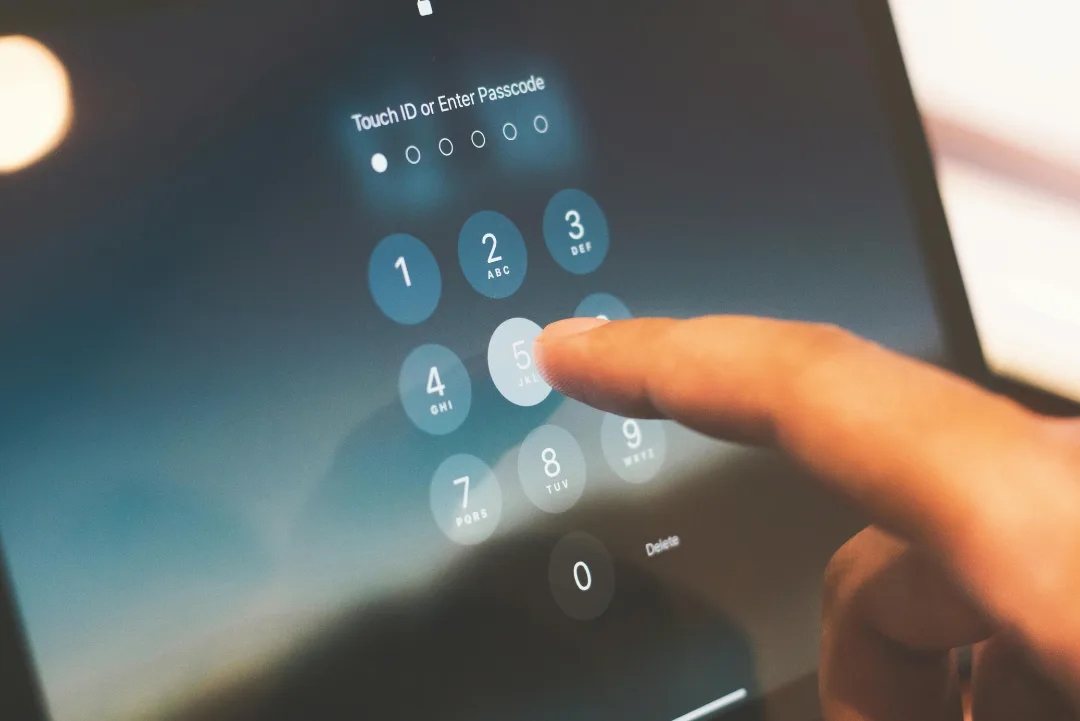
It’s Cybersecurity Awareness Month Proclamation No. 2054, s. 2010, as amended by Proclamation No. 353, s. 2023, and as such, we examine the cybersecurity landscape in the Philippines, its policy framework, and the Republic Act No. 8484, otherwise known as the Access Device Regulation Act of 1998.
In an era where businesses and individuals alike rely heavily on digital platforms, cybercrime has become a global threat. The need for cybersecurity measures has become imperative. In the Philippines, key vertical markets for cybersecurity include the Philippine government, the financial sector, healthcare, education, telecommunications, and the business process outsourcing (BPO) industry, with software sales forecasted to reach $1.26 billion by 2028, according to the International Trade Association.
Whether you’re an international corporation outsourcing work in the Philippines, a fintech firm handling cross-border transactions, or a global partner engaging with Philippine clients, understanding the legal landscape of cybercrime in the Philippines is essential.
The Access Devices Regulation Act of 1998 (Republic Act No. 8484)
As digital payments, e-commerce, and card-based transactions become ubiquitous, the integrity and security of “access devices” (credit cards, debit cards, PINs, codes, etc.) become pivotal concerns. The RA 8484, better known as the Access Devices Regulation Act of 1998, establishes one of the earliest legal frameworks addressing fraud and misuse of such instruments.
It recognizes the recent advances in technology and the widespread use of access devices in commercial transactions, and acknowledges that the advances in information technology on access devices have been exploited by criminals and criminal syndicates in perpetrating fraudulent activities that ultimately undermine the trust of the public in the banking industry.
The RA 8484, as amended by RA 11449, defines ‘access devices’ as any card, plate, code, account number, electronic serial number, personal identification number, or other telecommunications service, equipment, or instrumental identifier, or other means of account access that can be used to obtain money, good, services, or any other thing of value or to initiate a transfer of funds (other than a transfer originated solely by paper instrument).
The Act further distinguishes counterfeit access devices (forged or altered), unauthorized access devices (stolen, revoked, or fraudulently obtained), and access devices fraudulently applied for (obtained using false pretense or misrepresentation).
Sec. 3(c) Counterfeit Access Device – means any access device that is counterfeit, fictitious, altered, or forged, or an identifiable component of an access device or counterfeit access device or any fraudulent copy or reproduction of a valid access device
(d) Unauthorized Access Device – means any access device that is stolen, lost, expired, revoked, canceled, suspended, or obtained with intent to defraud;
(e) Access Device Fraudulently Applied for – means any access device that was applied for or issued on account of the use of falsified document, false information, fictitious identities and addresses, or any form of false pretense or misrepresentation
As amended.
Punishable Acts
Section 9 enumerates several acts punishable under the law, including:
- Producing, trafficking in, or using counterfeit access devices, such as cloned credit or debit cards.
- Using or possessing unauthorized access devices; those lost, stolen, expired, revoked, canceled, or obtained through fraud.
- Procuring access devices through false statements or misrepresentations.
- Causing another person to use an access device with the intent to defraud.
- Possessing device-making equipment for counterfeit access devices.
- Making or selling altered or counterfeit instruments intended to mislead access device systems.
- Obtaining money or services using an unauthorized access device.
- Engaging in a conspiracy to commit any of the above acts.
Crucially, the law also imposes liability on corporations by holding them accountable for acts committed by employees or officers within the scope of their functions.
Penalties
Originally, the law prescribed imprisonment ranging from six (6) years and one (1) day to twenty (20) years and fines double the value of the fraudulently obtained goods or services. However, RA 11449 later increased these penalties to address the growing sophistication and magnitude of cyber-financial crimes.
Consumer Protection and Disclosure
Beyond penal provisions, RA 8484 also introduced regulatory safeguards. It obliges issuers of access devices (e.g., credit card companies, banks) to disclose all finance charges to consumers, ensuring transparency and fairness in financial dealings. Misrepresentation or nondisclosure by such issuers constitutes a violation of the Act.
RA 11449 (2019): Strengthening the Fight Against Access Device Fraud
In 2019, RA 11449 was signed into law to “further strengthen the laws on anti-access device fraud.” This amendment modernized RA 8484 to meet the demands of the digital age, addressing contemporary fraud schemes and providing stricter deterrents.
Key amendments include:
- Increased Penalties. Violators now face imprisonment of twelve (12) to twenty (20) years and fines ranging from ₱300,000 to ₱2 million, depending on the gravity of the offense.
- Expanded Definition of Access Devices. The amendment explicitly includes mobile phones, SIM cards, electronic serial numbers, and any device or identifier capable of initiating electronic transfers, acknowledging the shift toward mobile-based financial systems.
- Broader Criminal Liability. The law now penalizes those who (a) willfully distribute, sell, or make available access devices obtained fraudulently; (b) recruit or conspire with others to commit fraud involving access devices; and (c) use the internet or other digital means to commit such crimes.
- Corporate Accountability and Conspiracy. Entities and officers involved in organized fraud rings face liability equivalent to principal offenders.
- Alignment with Cybercrime Prevention Act (RA 10175). RA 11449 complements the Cybercrime Prevention Act, recognizing that modern access device fraud often occurs online. Thus, offenses may fall under both laws, enabling prosecutors to pursue digital and financial angles simultaneously.
The amendment significantly enhances the country’s deterrence and prosecution capability. For foreign investors and multinational businesses, the development signals a maturing regulatory framework that acknowledges the convergence of cybersecurity, financial regulation, and criminal enforcement.
If you need assistance in navigating the foreign applicability of the law, our Firm can guide you through the legal process and help secure enforceability within the Philippine jurisdiction.
Disclaimer: The content of this blog is intended for general informational and educational purposes only and does not constitute legal advice. Laws and regulations may vary by jurisdiction, and the applicability of the information herein may differ depending on specific facts and circumstances. Accessing or reading this content does not create an attorney–client relationship. For legal concerns or tailored guidance, please consult a qualified lawyer licensed in your jurisdiction.
Whether you are based in the Philippines or overseas, STLAF offers legal services to both local and international clients. Our team is equipped to assist with cross-border matters, provide jurisdiction-specific guidance, and help you navigate complex legal challenges with confidence.
To read more STLAF legal tidbits, visit www.stlaf.global/bits-of-law.
For comments, suggestions, and inquiries, email legal@stlaf.global.
Author/s: Patricia Minimo
About the author: Patricia is STLAF's Legal Writer-Researcher. She is a Communication graduate from the University of the Philippines – Baguio with a major in Journalism and a minor in Speech Communication.