
Facts
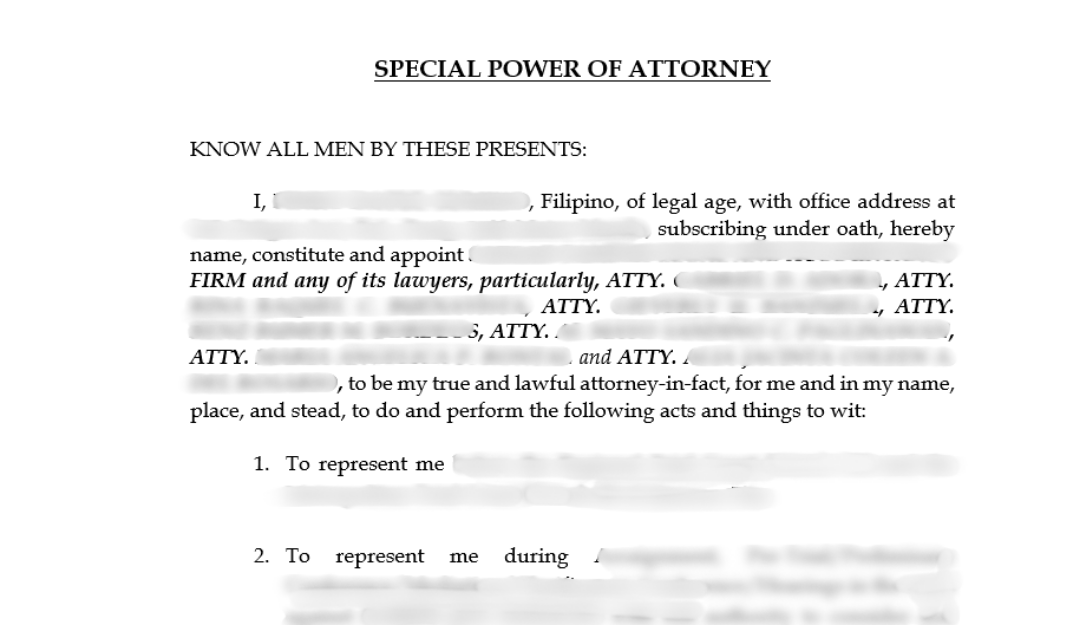
Meliton Alova executed a Special Power of Attorney (SPA) in favor of his daughter, Jessica, to administer a parcel of land registered in his name. The property is a conjugal property of Meliton and his wife, Felicidad Alova (Felicidad). In 1998, Meliton died. Despite knowing of her father’s death, Jessica, in 2003, used the SPA to obtain a credit line from San Miguel Foods, Inc. (SMFI) and mortgaged Meliton’s property as security. After she defaulted, SMFI foreclosed and acquired the property as the highest bidder. Felicidad, Meliton’s widow, and Decelyn, his daughter, assailed the validity of the mortgage and foreclosure, arguing that Jessica had no authority to act after Meliton’s death. The RTC ruled that while the SPA ended with Meliton’s death, Felicidad’s marital consent validated the mortgage as to her share. The CA, however, declared the mortgage void in its entirety. Thus, SMFI elevated the case to the Supreme Court.
ISSUE: Whether the SPA survived the death of Meliton and could validly authorize Jessica to mortgage the property.
Ruling
The Supreme Court ruled in the negative. It reiterated that “an agency is personal, representative, and derivative in nature, and it is extinguished upon the death of either the principal or the agent.” Thus, when Jessica executed the mortgage after Meliton’s death, she no longer had any authority to act in his name. The Court stressed that “any act performed by the agent after the termination of the agency is void, unless: (1) the agency is coupled with an interest, or (2) the agent, without knowledge of the death of the principal, continues to act in good faith.” Neither of these exceptions applied: the SPA was not executed for the common benefit of Jessica and her father, and Jessica was fully aware of Meliton’s death at the time she mortgaged the property.
Consequently, the mortgage and foreclosure were void insofar as they purported to bind Meliton’s estate and Felicidad’s conjugal share. However, the Court clarified that “upon the death of the decedent, succession opens and his heirs automatically acquire an undivided interest in the estate.” Jessica, as an heir, already had a transmissible share in the property at the time of the mortgage. Thus, while she could not bind her deceased father or her mother, she could validly encumber her hereditary share. The Court therefore held that the mortgage and foreclosure were valid only as to Jessica’s share in the property.