
Sadsad Tamesis Legal and Accountancy Firm

Author name: Patricia Minimo

Hand holding in comfort. safe spaes act

What You Need to Know about the Safe Spaces Act or the Bawal Bastos Law

On Tuesday, March 11, 2025, the Commission on Human Rights (CHR) released a statement backing the Senate Bill (SB) No. 2897 which sought to amend Republic Act (RA) No. 11313, otherwise known as the Safe Spaces Act or the Bawal Bastos law, to strengthen and widen its scope. The SB 2897 aims to widen the scope of ‘public spaces’ (Sec. 3 (g)) to include: in addition to: The bill likewise expands gender-based online sexual harassment to include artificial intelligence (AI) and other emerging technologies; and introduces the concept of ‘grooming’ as sexual harassment.   According to a 2020 post by the Philippine Commission on Women (PCW), 58% of harassments occurs outside and 70% of them happen during broad daylight. In the 2021 Lloyd’s Register Foundation-Gallup polls survey, as cited by the Women Workers United, around 1 in 5 Filipino workers experience harassment in the workplace—22% of which are women and 18% are men who have experienced workplace violence and harassment.  Meanwhile, in the 2024 Campaign to End Violence Against Women (VAW), the PCW released the reported VAW Cases statistics from 2016 to 2023, with 1,031 cases being violations against the Safe Spaces Act. The Safe Spaces Act, as well as the SB 2897, underscores the persisting problem of harassment against any persons, but especially women, children, and members of the LGBTQIA+ community, and the need to continually address and improve the protection against gender-based and sexual harassment.  Here’s what you need to know about the Safe Spaces Act and SB 2897. What is the Safe Spaces Act (Bawal Bastos Law)? Signed into law in 2019, the Safe Spaces Act or the Bawal Bastos Law aims to define and punish catcalling and other forms of gender-based sexual harassment (GBSH). Its Declaration of Policy states that it “recognizes that both men and women must have equality, security and safety not only in private, but also on the streets, public spaces, online, workplaces and educational and training institutions.” Under the Safe Spaces Act, GBSH is classified into: Gender-based Streets and Public Spaces Sexual Harassment The crimes under this classification are committed through any unwanted and uninvited sexual actions or remarks against any person regardless of the motive for committing such action or remarks (Sec. 4). They include: ‘Verbal’ GBSH 1st offense Twelve (12) hours community service inclusive of Gender Sensitivity Training (GST) and PHP 1,000 fine 2nd offense Imprisonment of 6 -10 days or PHP 3,000 fine 3rd offense Imprisonment of 11 – 30 days and PHP 10,000 fine ‘Gestural and ‘Demonstrated’ GBSH 1st offense Twelve (12) hours community service inclusive of GST and PHP 10,000 fine 2nd offense Imprisonment of 11 – 30 days or PHP 15,000 fine 3rd offense Imprisonment of 1 month and 1 day to 9 months and PHP 20,000 fine GBSH through stalking, and physical advances such as any touching, pinching, or brushing against the genitalia 1st offense Imprisonment of 11 – 30 days or a fine of PHP 30,000 provided that it includes attendance in a GST to be conducted by PNP in coordination with LGU and PCW 2nd offense Imprisonment of 1 month and 1 day to 6 months or PHP 50,000 fine 3rd offense Imprisonment of 4 months and 1 day to 6 months or PHP 100,000 fine Additional if the perpetrator is a driver or operator of a PUV Cancellation of license of the driver by the Land Transportation Office (LTO) Suspension or revocation of franchise by the Land Transportation Franchising and Regulatory Board (LTFRB). This sanction may be imposed upon order by the proper court OR upon order of LTO/LTFRB in an administrative proceeding If the perpetrator is a minor The Department of Social Welfare and Development (DSWD) shall take necessary disciplinary measures as provided for under Republic Act No. 9344, otherwise known as the “Juvenile Justice and Welfare Act of 2006″. List of penalties for gender-based sexual harassment (GBSH) in streets and public spaces under RA 11313 Article I, Sec. 11(a)(b)(c); format from Philippine Commission on Women (PCW). Where can victims of GBSH in streets and public spaces reach out for help? In all cases Local Government Unit via local Anti-Sexual Harassment (ASH) hotlineNearest police precinct through their Women and Children’s Protection DesksLocal Social Welfare and Development OfficePublic Attorney’s Office subject to PAO’s Persons Qualified for Legal Assistance Streets, roads, alleyways, parks Local traffic enforcer PUVs by a driver or operator of PUV  Local Traffic Enforcer, LTO, LTFRB Close proximity to the LGU Hall Anti-Sexual Harassment (ASH) Desk Officer of the LGU (Provincial, Municipal, City, or Barangay) Malls, Bars, Public Establishments ASH Officer designated by operator of Malls, Bars, Public Establishments(e.g. security officers) List of authorities a victim can reach in case of GBSH in streets and public spaces according to RA 11313; format from Philippine Commission on Women (PCW). Gender-Based Online Sexual Harassment The crimes under this classification include acts that use information and communications technology in terrorizing and intimidating victims through: In general Corrective prison (prision correccional) in its medium period or a fine of not less than PHP 100,000.00 but not more than PHP 500,000.00, or both, at the discretion of the court If the perpetrator is a juridical person License or franchise shall be automatically deemed revoked, and the persons liable shall be the officers thereof, including the editor or reporter in the case of print media, and the station manager, editor and broadcaster in the case of broadcast media If the perpetrator is a foreigner (alien) Subjected to deportation proceedings after serving sentence and payment of fines. List of penalties for perpetrators of online GBSH according to RA 11313 and PCW. Where can victims of online GBSH reach out for help? The PNP Anti-Cybercrime Group (PNPACG) as National Operational Support Unit of the PNP, in collaboration with the Department of Information and Communications Technology (DICT), is responsible for the implementation and enforcement of Philippine laws on cybercrime. They receive complaints about GBSH and develop online mechanisms for reporting real-time online GBSH and apprehending the perpetrators. Victims can

What You Need to Know about the Safe Spaces Act or the Bawal Bastos Law Read More »

Atty. Kathrina Mishael C. Sadsad-Tamesis: The Woman In the Scenes

A woman to herself, a lawyer, a boss, an entrepreneur, and a mom—all these things define her. To her, it’s because women have endless possibilities and she chooses to do and have it all for her happiness, even if society may think otherwise. Graduated in the top 5 from the University of Santo Tomas (UST) Faculty of Civil Law and with a Master’s Degree in Entrepreneurship from the Ateneo Graduate School of Business, Atty. Kathrina Mishael C. Sadsad-Tamesis specializes in litigation, specifically civil and criminal litigations, with a focus on family law, adoption, guardianship, nullity of marriage and legal separation, and judicial recognition of foreign divorce.  Known as Atty. KCS to the firm, Sadsad-Tamesis is a Partner of Sadsad Tamesis Legal and Accountancy Firm (STLAF) and the CEO of Metro.KST Enterprises, Corp., (MKST), the flagship company of her two operating businesses: the Massagedaily.ph and Metrobaby.ph. “For me, it’s just [about] finding the right balance,” she said in an interview. “It’s basically how you see your happiness and how you balance it. […] Life is hard and it’s hard to balance [responsibilities] but at the end of the day, you will [be the one to] choose. Ikaw yung pipili. Choose your happiness and accept the consequences of your choices.” Women in Law One of her sources of happiness comes from the fulfillment of helping people and winning cases for her clients as a lawyer, which has always been her dream job. After passing the Bar Examination in 2013, she worked as a corporate lawyer of several groups of companies, then practiced in PricewaterhouseCoopers (PwC) Philippines, an audit and tax firm. However, it is only in her third job where she practiced litigation as a junior associate that she truly enjoyed her work.  “I enjoy meeting people, going to court, appearing before the judges and solving other people’s cases. When I win a case, I’m very happy,” said Sadsad-Tamesis. “Whether I’m for the accused or the complainant, for me, it’s like a puzzle. You solve it, you look into the details. Tignan mo kung ano yung defenses mo, or saan yung mga matters na malakas ka and you solve it. I love the challenge and I enjoy doing it the most.” In 2016, Sadsad-Tamesis and fellow Partners formed a law firm in Bulacan—the De Guia, Tamesis & Sadsad Law Firm, which was more of a part-time job to them. When she got pregnant and had a hard time going to her then-job, she resigned and focused her efforts towards their law firm.  Around 2019, she and her husband, Atty. Chris Tamesis decided to open another law firm in Quezon City—the STLAF. “Why? Because that’s what I wanted to do. Dun ako nag-e-enjoy. That’s the job that motivates me to wake up in the morning […] That’s what inspires me the most.” This is especially true when it comes to family law cases, her specialization. “Favorite ko yung family law because it gives you a sense of fulfillment once you resolve the case,” she beamed. “For me kasi, lawyering is not just about getting money, it’s about helping other people [too].”  For her, it’s the connection with the clients that matter. “It’s full of emotions. Mas masaya, actually. Iba yung connection sa client in family law cases because you get to know them,” explained Sadsad-Tamesis, specifically pertaining to annulment and adoption cases. “Nase-serve yung purpose ko as a lawyer, as a woman.” Lawyering, like other careers, is not just for men; it hasn’t been for a long time now, she emphasized. For her, the legal industry has evolved to not only recognize but also showcase women’s excellence. “When I was in law school, mas marami nang babae […] Before kasi diba, parang pag lawyer, mostly lalaki. But for me, ngayon, nagiging pantay na,” she recalls. “Sa MTC, RTC, ang dami nang babaeng judges. So talagang pantay na for me. Lawyering is really [not just] for men, it’s also for women and maraming nag-e-excel na mga babaeng lawyers. Women in Business A respected lawyer in the firm, Sadsad-Tamesis is also an entrepreneur and CEO of the fast-growing company MKST. MKST houses Massagedaily.ph (MDPH), a home service spa with 39.5k followers on Facebook and Instagram, and its events division, the Luxe Lounge by MDPH.  “I really love massages since college. I also grew up kasi na merong nagho-home service sa bahay namin for my lola,” told Sadsad-Tamesis, recalling her memories. “[Although], before di ako fan ng home service; I go to the spa mismo. Then may isang beses, we tried home service and really liked it since you don’t have to travel home after getting your massage.” According to her, it’s convenient and effort-efficient. However, because of demand, her favorite home service spa was always fully booked, so she thought, why not take advantage of it? “Parang naisip ko, ‘Edi ako na lang mag-p-provide’. Naisip ko, ako na lang magbu-buo ng business na yon. I’ll build my own home service spa,” she chuckles. “Feeling ko meron [kasing] malaking market na hindi nase-serve…” On navigating leadership and decision-making As a Partner lawyer and CEO of a business, Sadsad-Tamesis approaches leadership and decision-making with professional finesse, consideration, and proficiency. Between the top-to-bottom and bottom-to-top strategy, she prefers the former.  “For me kasi mas mabilis yung top-to-bottom, communication is more direct and efficient but at the same time, I am still making sure that the decision is okay with everybody, hindi yung I’ll decide and impose. I do not want to impose on my people kung anong gagawin nila, I want to still give them the freedom to suggest and I honestly listen to those suggestions.” Sadsad-Tamesis greatly values her people’s perspectives and inputs. To her, they are the heart of an organization. “People [who] compose our organization, I believe, is the heart of the organization, not the leader. Kumbaga, ikaw leader ka, kung wala ka namang tao, wala kang followers, how can you lead right?” She points out, “[V]ery important sa akin yung mga tao sa

Atty. Kathrina Mishael C. Sadsad-Tamesis: The Woman In the Scenes Read More »

Can a co-owner sell their share without the consent of others? | G.R. No. 225159

Doctrine A co-owner has the right to alienate his pro indiviso share in the co-owned property even without the consent of the other co-owners. But such alienation is limited only to the portion which may be allotted to him in the division upon the termination of the co-ownership under the principle of nemo dat quod non habet (No one can give what he does not have).  Facts Julian and Marcela died, leaving nine children, including Isidoro. The heirs executed a “Partihan at Bilihan nang Kalahating Bahagi ng Lupang Tirahan sa Labas ng Hukuman,” and sold half of the subject property to Anastacio. The remaining quarter was occupied by Vitaliano’s children, namely, the petitioner and Fermin, while the other quarter was sold by Isidoro to respondent Spouses Garcia. Thereafter, respondent Spouses Garcia filed an ejectment case against Fermin for the ¼ of the subject property. Petitioner filed a complaint for recovery of ownership, quieting of title and annulment of deed of sale against the spouses Garcia alleging that the Deed of Sale is void since Isidoro is not the true and real owner of the subject property which originally belongs to Julian’s estate. On the other hand, Spouses Garcia argued that the heirs had already agreed to divide the property among themselves when they allowed a portion of the property to be occupied by the heirs of Vitaliano. ISSUE: Whether or not Isidoro, as co-heir, can alienate his pro indiviso share of the co-owned property. Ruling Yes. It is undisputed that the subject property belongs to Julian and that upon the demise of Julian and his wife Marcela, the heirs executed a Partihan at Bilihan nang Kalahating Bahagi ng Lupang Tirahan sa Labas ng Hukuman, which sold half of the subject property to their co-heir Anastacio. As to the remaining half of the subject property, the same remains in the estate of Julian and Marcela.  Nonetheless, a co-owner may alienate an inchoate portion of the subject property that belongs to him or her. Article 493 of the Civil Code provides for the rights of co-owners over co-owned property. Thus, Isidoro, as one of Julian and Marcela’s heirs, has the right to alienate his pro indiviso share in the co-owned property even without the consent of the other co-heirs.  However, as a mere part owner, he cannot alienate the shares of the other co-owners. Nemo dat quod non habet. No one can give what he does not have. Hence, as correctly ruled by the courts a quo, Isidoro’s sale of the remaining half of the subject property will only affect his own share but not those of the other co-owners who did not consent to the sale. The spouses Garcia will only get Isidoro’s undivided share in the subject property.  However, Reynaldo Reyes’ recourse should have been a division of the common property. To demand a partition or division of the common property is in accord with Article 494 of the Civil Code, that is, no co-owner shall be obliged to remain in the co-ownership and that each co-owner may demand at any time partition of the thing owned in common insofar as his or her share is concerned. The spouses Garcia, as co-owners of the 231.5 sqm subject property by virtue of the deed of sale dated August 16, 1989, executed by Isidoro in their favor, cannot claim a specific portion of the subject property before its partition. With the subsistence of co-ownership, the spouses Garcia only own Isidoro’s undivided aliquot share of the subject property. The spouses Garcia and all the co-owners cannot adjudicate to himself or herself title to any definite portion of the subject property until its actual partition by agreement or judicial decree.

Can a co-owner sell their share without the consent of others? | G.R. No. 225159 Read More »

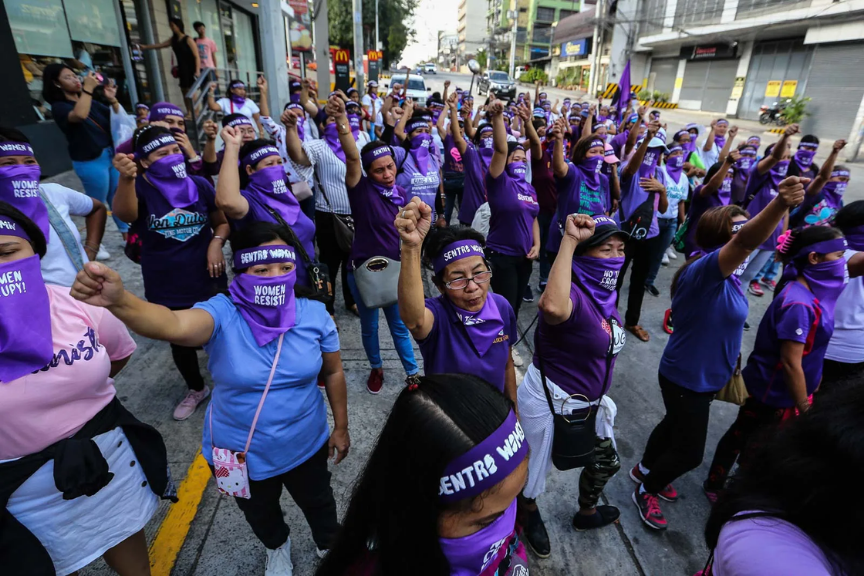
Protest for Women's Rights.

Safeguarding Women’s Rights: Magna Carta of Women

According to the 2024 World Economic Forum (WEF), the Philippines is the most gender-equal country in Asia with a gender parity score of 77.9% (0.779 out of 1) and ranking 25th out of 146 countries. Along with New Zealand, it is the only country from East Asia and the Pacific to have made the global top 10 due to its sustained efforts in adopting and enacting legal frameworks that aim to safeguard and empower women’s rights in Philippine society. One such legal framework, the holy grail of women’s rights law in the Philippines, is Republic Act 9710, better known as the Magna Carta of Women (MCW). Former President Gloria Macapagal Arroyo signed it into law on August 14, 2009. What is the Magna Carta of Women (MCW)? Entitled the “Magna Carta of Women” and not “Magna Carta for Women” to highlight women’s participation and ownership of the bill, the MCW is the Philippines’ affirmation of the protection and empowerment of women in the country who continue to be marginalized and discriminated against in our society.  Its Declaration of Policy (Sec. 2) states that “the State affirms the role of women in nation building and ensures the substantive equality of women and men. It shall promote empowerment of women and pursue equal opportunities for women and men and ensure equal access to resources and to development results and outcome,” and that “the State realizes that equality of men and women entails the abolition of the unequal structures and practices that perpetuate discrimination and inequality.” The MCW upholds the provisions of the Convention on the Elimination of All Forms of Discrimination Against Women (CEDAW) and other international instruments consistent with Philippine law in condemning and eliminating discrimination against women and underscoring women’s rights as human rights. What is discrimination against women? Sec. 4, Chapter II defines ‘discrimination against women’ as: (1) any gender-based distinction, exclusion, or restriction which has the effect or purpose of impairing or nullifying the recognition, enjoyment, or exercise by women, irrespective of their marital status, on a basis of equality of men and women, of human rights and fundamental freedoms in the political, economic, social, cultural, civil or any other field;  (2) any act or omission, including by law, policy, administrative measure, or practice, that directly or indirectly excludes or restricts women in the recognition and promotion of their rights and their access to and enjoyment of opportunities, benefits, or privileges;  (3) a measure or practice of general application that fails to provide for mechanisms to offset or address sex or gender-based disadvantages or limitations of women, as a result of which women are denied or restricted in the recognition and protection of their rights and their access to and enjoyment of opportunities, benefits, or privileges; or women, more than men are shown to have suffered the greater adverse effects of those measures or practices; and  (4) discrimination compounded by or intersecting with other grounds, status, or condition, such as ethnicity, age, poverty, or religion. MCW safeguards women from discrimination by having the State fulfill its duties through law, policy, regulatory instruments, administrative guidelines, and other appropriate measures, including temporary special measures. What are the women’s rights under MCW? Under Chapter IV, the following are the rights of women to be enjoyed without discrimination: What are the rights of women in marginalized sectors? Meanwhile, Chapter V outlines the rights of women in marginalized sectors. The MCW defines ‘marginalization’ as “a condition where a whole category of people is excluded from useful and meaningful participation in political, economic, social, and cultural life,” and consequently, the ‘marginalized’ as “the basic, disadvantaged, or vulnerable persons or groups who are mostly living in poverty and have little or no access to land and other resources, basic social and economic services such as health care, education, water and sanitation, employment and livelihood opportunities, housing, social security, physical infrastructure, and the justice system” such as: Women in these sectors are guaranteed all civil, political, social, and economic rights recognized, promoted, and protected under existing laws including, but not limited to, the Indigenous Peoples Rights Act, the Urban Development and Housing Act, the Comprehensive Agrarian Reform Law, the Fisheries Code, the Labor Code, the Migrant Workers Act, the Solo Parents Welfare Act, and the Social Reform and Poverty Alleviation Act. According to the Philippine Commission on Women (PCW), under the MCW women in marginalized sectors are entitled to: Implementation of MCW Because the law is the Philippines’ commitment to the rights of our women, the Government, its agencies, and other government-owned and controlled bodies, as well as private sectors and individuals shall not only contribute but also adhere to the recognition, respect, and promotion of women’s rights and abide by the rule of law. At the core of this law is the PCW, formerly called the National Commission on the Role of Filipino Women, which is tasked with the overall monitoring and supervision of the MCW’s implementation. It is the primary policy-making and coordinating body for women and gender equality concerns in the Philippines. (Sec. 36 & 38) In consonance with the MCW and the PCW, the Commission on Human Rights (CHR) is the Gender and Development Ombud that ensures the promotion and protection of women’s human rights. (Sec. 39) The Commission on Audit (COA) is tasked to conduct an annual audit on the use of the Gender and Development (GAD) budget to determine its judicious use and the efficiency, and effectiveness of interventions in addressing gender issues toward the realization of the objectives of the country’s commitments, plans, and policies on women empowerment, gender equality, and GAD. (Sec. 36(a)) Violation of MCW No one is above MCW and anyone who violates it shall be held liable under its mandate and provisions.   According to the PCW, the Commission on Human Rights shall recommend sanctions under administrative law, civil service, or other appropriate laws to the Civil Service Commission (CSC) and the Department of the Interior and Local Government (DILG). For instance, in the case

Safeguarding Women’s Rights: Magna Carta of Women Read More »

child abuse

Discipline or child abuse? | G.R. No. 268457

Facts One afternoon, AAA, who was twelve (12) years old then, was asked by her father, XXX, if she had already eaten lunch. When AAA said that she did not eat yet, XXX got angry. XXX cursed at her while asking why she did not eat yet, and then he proceeded to hit AAA with a wooden rod embedded with a nail, hitting her on the back, right arm, and right thigh. This caused AAA to cry in pain as the nail hit her with every strike.  Then, in another instance, XXX saw AAA holding a one-hundred (100) peso bill. XXX asked AAA where she got the money and she said that she got it from her Hello Kitty sling bag. At home, XXX counted the money inside AAA’s coin bank. XXX confronted AAA and her brother, BBB, who was ten (10) years old at that time, asking why the amount inside the coin bank was less than his estimation. XXX threw the coin bank at them and ordered them to go upstairs to look for any money that they might be hiding in their closet.  While they were upstairs, XXX began scolding and hurting both AAA and BBB. XXX pulled AAA’s hair, kicked her, and hit her head. XXX struck BBB with the handle of a dustpan on his left and right sides. XXX only stopped by AAA and BBB gave him the rest of their money. AAA and BBB left the house and proceeded to the home of CCC, their mother. ISSUE: Is XXX guilty of child abuse under Section 10(a) of Republic Act No. 7610? Ruling YES, XXX is guilty of child abuse under Section 10(a) of Republic Act No. 7610.  When the infliction of physical injuries against a minor is done at the spur of the moment or intended to discipline or correct the wrongful behavior of the child, it is imperative that the specific intent to debase, degrade, or demean the intrinsic worth and dignity of the child as a human be established. In the absence of this specific intent, the offender cannot be held liable for child abuse but only for other crimes punishable under the Revised Penal Code, provided that all the elements of the latter are present. pay4d In this regard, to determine the presence or absence of this specific intent, the Court may consider the circumstances of the case and the manner in which the offender committed the act complained of, such as when the offender’s use of force against the child was calculated, violent, excessive, or done without any provocation. Such intention can also be derived from the disciplinary measures employed by the offender, such as when such measures are not commensurate with or reasonable to address or correct the child’s misbehavior. In this case, the Supreme Court determined that XXX committed acts that debased, degraded, or demeaned the intrinsic worth and dignity of AAA and BBB as human beings.  Hitting AAA several times with a wooden rod embedded with a nail was certainly not commensurate or reasonably necessary to discipline her just because she had not eaten her lunch. In the same vein, XXX used excessive force when he pulled AAA’s hair, kicked, hit her head, and struck BBB with a dustpan multiple times just because the money saved in their coin banks was lacking.  Although XXX, as a parent, has the right to instill discipline in his minor children, still, the disciplinary measures he employed, in this case, were excessive, violent, and completely disproportionate to correct the alleged misconduct or misbehavior of his children.  His abusive acts may be considered extreme measures of punishment not commensurate with the discipline of his 12-year-old and 10-year-old children. Given these circumstances, it can be reasonably inferred that his act of laying hands on his children was done with the specific intent to debase, degrade, or demean their intrinsic worth and dignity as human beings. RELATED ARTICLE: Is pointing a gun at a child an act of abuse? | Case No. 236628

Discipline or child abuse? | G.R. No. 268457 Read More »

A Step-by-Step Guide to the Declaration of Nullity of Marriage in the Philippines

Aside from the Vatican, the Philippines is the only country that does not have divorce laws. But fret not! The Philippine laws, particularly the Family Code of the Philippines, still provide legal remedies for those spouses trapped in loveless and abusive marriages. This article’s main topic concerns filing your Petition for Declaration of Nullity of Marriage. Do you want to know more about the other types of separation? Read: 3 Types of Separation: Everything You Need to Know If you think your marriage falls under any of the grounds for void marriages, here are the steps that you need to take to start the process of having your marriage declared annulled: Step 1: Seek Legal Advice The initial step in filing for a Petition for Declaration of Nullity of Marriage in the Philippines is to consult a family law lawyer. Your lawyer is the one who will review your situation, as well as assess and determine whether your case meets the legal grounds for nullity. Your lawyer will also guide you throughout the whole process of getting your marriage declared null and void. Take note that full disclosure of all relevant details is essential because this will allow your lawyer to assess the strength of your case based on the applicable legal grounds. Step 2: Prepare the documents that you need to prepare for the filing of the Petition While your lawyer will prepare the Petition, which contains the facts supporting your claims, the legal ground of your nullity, and the relief you sought, as the Petitioner, you must gather the necessary documents. Collating these documents is a crucial step in filing for the Declaration of Nullity of Marriage, as these documents will serve as your evidence to support your case. These documents are, but not limited to: Step 3: Drafting and Filing of the Petition The Petition must be filed with the Regional Trial Court that has jurisdiction over the residence of either you or your spouse. For your petition to be considered as filed, you must pay the docket fee. Once the docket fee has been paid, the Office of Executive Clerk of Court will then raffle and assign your case to the Family Court of the Regional Trial Court. Step 4: Court Proceedings (Important Hearings wherein the Petitioner is required to appear) The Clerk of Court of the Regional Trial Court assigned to the case will then issue a Summons to your spouse, together with the Petition. Once the Summons has been served to your spouse, the Court has now acquired jurisdiction over you and them. This means that the Court will now hear the presentation of evidence of both parties. Take note that the following hearings require your appearance, such as, but not limited to: Step 5: Decision and Decree of Declaration of Absolute Nullity of Marriage (Annulment) After trial, the Court may grant or deny the Petition. If the Court grants the Petition, and no appeal has been made, the Court will issue an Entry of Judgment. Both parties may appeal the decision of the Court, depending on the judgment. Once an Entry of Judgment has been issued, you may now start the process of having it recorded: first in the Civil Registry where the Family Court is located, and second, in the Civil Registry where the marriage is recorded. After this, a Decree of Declaration of Absolute Nullity of Marriage will be issued by the Court. Disclaimer: The content of this blog is for informational and educational purposes only and should not be considered as legal advice. While we strive to provide accurate and up-to-date information, the blog does not create an attorney-client relationship. For legal concerns or specific legal guidance, please consult a qualified lawyer. To read more STLAF legal tidbits, visit www.stlaf.global/bits-of-law. For comments, suggestions, and inquiries, email legal@stlaf.global. ABOUT THE AUTHOR: Atty. Alia Jacinta Coleen A. Del Rosario obtained her Juris Doctor degree from the Arellano University School of Law, and holds a Bachelor’s Degree in Business Administration with a Major in Marketing Management. With a background as a Paralegal, she has built her expertise in the legal field by taking on a broad range of responsibilities. She has represented clients in small claims cases, participated in Single Entry Approach (SENA) hearings for labor disputes, and provided assistance in various other legal matters. 

A Step-by-Step Guide to the Declaration of Nullity of Marriage in the Philippines Read More »

Are the elements of threat, force, or coercion necessary to establish child trafficking cases? | G.R. No. 259133

Facts Police operatives from the Philippine National Police Women and Children Protection Center (PNP-WCPC) and Anti Trafficking in Person Division formed a team to investigate and conduct surveillance in Rizal after receiving information from a confidential informant about child trafficking On March 15, 2016, the team proceeded to the area subject of the information and found Villaria and Maghirang, sitting at a table. The confidential informant called them to join the team’s table to talk. A few hours later, Maghirang asked the team if they wanted to have lady companions aged 14 to 18 for sex, with prices ranging from Php 1,000.00 for three hours to Php 3,000.00 for an overnight.  A police officer informed them that they would be back to celebrate a friend’s birthday. The accused were arrested on the agreed date after bringing several female minors to the hotel room and accepting marked money from the police. slot gacor gampang menang high flyer During the trial, the victims revealed that the accused enticed them to attend a party and perform sexual acts in exchange for money. The accused argued that the prosecution failed to prove they threatened, forced, or coerced the minors into prostitution. ISSUE: Is threat, force, or coercion required in child trafficking cases? Ruling NO. The elements of trafficking in persons, as derived from its definition under Section 3 (a) of Republic Act No. 9208, as amended by Republic Act No. 10364, are:  All of the elements of qualified trafficking were proven beyond reasonable doubt. The testimonies of the victims clearly established that the appellants recruited, obtained, hired, provided, offered, and transported the minors for the purpose of “awra” or prostitution. Their testimonies were corroborated by PINSP Abana who stated that he negotiated with the accused-appellants to procure the sexual services of the victims in exchange for money at an agreed price. It was further established that all the victims were minors at the time of trafficking.  The absence of threat, force, or coercion is immaterial and irrelevant. Under Section 3 (a) of Republic Act No. 9208, as amended, the crime is still considered trafficking if it involves the “recruitment, transportation, transfer, harboring, or receipt of a child for the purpose of exploitation” even if the means employed are not within those outlined in the law. At any rate, accused-appellants evidently took advantage of the victims’ youth and need to earn money to obtain their consent.

Are the elements of threat, force, or coercion necessary to establish child trafficking cases? | G.R. No. 259133 Read More »

Does filing a separate case while another is still pending violate the rule against forum shopping? | G.R. No. 186720

Facts Sometime in 1996, Spouses Medado and the Estate of Antonio Consing, represented by Soledad Consing, executed Deeds of Sale with Assumption of Mortgage for the former’s acquisition from the latter of the property in Cadiz City. As part of the deal, Spouses Medado undertook to assume the estate’s loan with PNB. Subsequent to the sale, however, the Estate of Consing offered the subject lots to the government via the Department of Agrarian Reform’s Voluntary Offer to Sell (VOS) program. The Estate of Consing also instituted with the RTC an action for rescission and damages against Spouses Medado, PNB and the Register of Deeds of Cadiz City, due to the alleged failure of the spouses to meet the conditions in their agreement. In the meantime the Civil Case for rescission was pending, the Land Bank of the Philippines (LBP) issued in favor of the Estate of Consing a certificate of deposit of cash and agrarian reform bonds, as compensation for the lots covered by the VOS. The foregoing prompted Spouses Medado to institute an action for injunction with prayer for the issuance of a temporary restraining order.  The RTC issued an Order granting Spouses Medado’s application for the issuance of writs of preliminary prohibitory and mandatory injunction. Feeling aggrieved, the heirs of the late Antonio Consing questioned the RTC’s order via a petition for certiorari filed with the CA. They sought, among other reliefs, the dismissal of the complaint for injunction for violation of the rules on litis pendentia and forum shopping. slot gacor olympus pragmatic play The CA ruled that the RTC gravely abused its discretion by taking cognizance of the civil case for an injunction while the civil case for rescission and damages was pending, as this violated the rule against forum shopping. ISSUE: Whether or not the CA correctly held that the rule against forum shopping was violated by the filing of the complaint for an injunction during the pendency of the action for rescission and damages Ruling YES. Forum shopping exists when the elements of litis pendentia concur. There is forum shopping when the elements of litis pendentia are present, i.e., between actions pending before courts, there exist:  Applying the foregoing, there was clearly a violation of the rule against forum shopping when Spouses Medado instituted Civil Case No. 797-C for injunction notwithstanding the pendency of Civil Case No. 00-11320 for rescission of contract and damages. All elements of litis pendentia are present with the filing of the two cases. There is no dispute that there is the identity of parties representing the same interests in the two actions, both involving the estate and heirs of the late Consing on one hand and Spouses Medado on the other. The rescission case names “Soledad T. Consing, for herself and as administratrix of the estate of Antonio Consing” as the plaintiff, with “Spouses Meritus Rey and Elsa Medado, [PNB] and the Register of Deeds of Cadiz City” as respondents.  The injunction case, on the other hand, was instituted by Spouses Medado, against “(LBP) and the Heirs of the Late Antonio Consing, as represented by Dra. Soledad Consing.” The primary litigants in the two actions, and their interests, are the same. The two other elements are likewise satisfied. There is an identity of rights asserted and reliefs prayed for in the two cases, with the reliefs being founded on the same set of facts. In both cases, the parties claim their supposed right as owners of the subject properties. They all anchor their claim of ownership on the deeds of absolute sale which they had executed, and the law applicable thereto. They assert their respective rights, with Spouses Medado as buyers and the heirs as sellers, based on the same set of facts that involve the deeds of sale’s contents and their validity. Both actions necessarily involve a ruling on the validity of the same contract as against the same parties. Thus, the identity of the two cases is such as would render the decision in the rescission case res judicata in the injunction case, and vice versa. It does not even matter that one action is for the enforcement of the parties’ agreements, while the other action is for the rescission thereof.  WHEREFORE, premises considered, the instant petition for review on certiorari is hereby DENIED. Accordingly, the Court of Appeal’s Decision dated September 26, 2008, which reversed and set aside the order of the Regional Trial Court, Branch 60, Cadiz City, dated March 09, 2007, is perforce AFFIRMED.

Does filing a separate case while another is still pending violate the rule against forum shopping? | G.R. No. 186720 Read More »

Basics of Alternative Dispute Resolution Act

Disputes, disagreements, and conflicts are common in people’s everyday lives, but sometimes, they escalate, and the need for overseeing authority and fair and efficient ways to resolve them becomes essential. And so enters the Philippine court system with corresponding jurisdiction over different cases. However, due to clogged court cases, dysfunction and delays in judicial decisions and awards persist in the country. As such, the State enacted Republic Act No. 9285, otherwise known as the Alternative Dispute Resolution Act of 2004 (ADR Act), which sought to actively promote party autonomy in the resolution of disputes or the freedom of parties to make their own arrangements to resolve their disputes, achieve speedy and impartial justice, and unclog court dockets.  The ADR Act adopts the United Nations Commission on International Trade Model Law on International Arbitration (UNCITRAL Model Law) and employs the Alternative Dispute Resolution System, which, according to Section 3 of the Act, refers to any process or procedure for resolving a dispute or controversy assisted by a neutral third party instead of a court presiding judge or an officer of a government agency.  With the agreement of both parties, ADR Providers, such as institutions or persons accredited or nonaccredited as mediators, conciliators, arbitrators, neutral evaluators, etc., exercise ADR functions. Forms of ADR The most commonly used are arbitration and mediation. Arbitration According to Section 3 (d), arbitration means a voluntary dispute resolution process in which one or more arbitrators, appointed per the agreement of the parties, or rules promulgated under this Act, resolve a dispute by rendering an award. agen slot gacor demo spaceman The Republic Act No. 876 continues to govern domestic arbitration, subject to the applicable provisions of the ADR Act and its Implementing Rules and Regulations (IRR) and the Model Law on International Commercial Arbitration adopted by the UNCITRAL on 21 June 1985.  On the other hand, the ADR Act, its implementing rules and regulations, and the New York Convention govern foreign arbitration.  Mediation According to Section 3 (q), mediation is a voluntary process in which a mediator, selected by the disputing parties, facilitates communication and negotiation, and assists the parties in reaching a voluntary agreement regarding a dispute. Other forms of ADR include: Conciliation According to the Cooperative Development Authority (CDA), conciliation is a process whereby a neutral third party takes a vigorous and active role in assisting disputants in formulating solutions to reach an amicable settlement. Conciliation can be considered under mediation. Early Neutral Evaluation Section 3 (n) of the Act defines early neutral evaluation as an ADR process wherein parties and their lawyers are brought together early in a pre-trial phase to present summaries of their cases and receive a nonbinding assessment by an experienced, neutral person, with expertise in the subject in the substance of the dispute. Mini-trial According to Section 3 (u), a mini-trial is a structured dispute resolution method in which the merits of a case are argued before a panel comprising senior decision makers with or without the presence of a neutral third person after which the parties seek a negotiated settlement. And any combination of the foregoing. ADR Services Mandated in Section 49 of the Act, the Office of Alternative Dispute Resolution (OADR) which is an attached agency to the Department of Justice (DOJ), is established to promote, develop, and expand the use of ADR in the private and public sectors. It also aims to assist the government in monitoring, studying, and evaluating the use by the public and the private sector of ADR, and recommend to Congress necessary statutory changes to develop, as well as to strengthen and improve ADR practices following world standards. These are other agencies that also offer ADR services: To read more STLAF legal tidbits, visit www.stlaf.global/bits-of-law. For comments, suggestions, and inquiries, email legal@stlaf.global.

Basics of Alternative Dispute Resolution Act Read More »

On Anti-Trafficking and Safeguarding Filipino Travelers: DOJ Memorandum Circular No. 036-2015

The Philippines currently ranks as a Tier I country in its serious and sustained efforts to eliminate trafficking in a 2024 report by the US Department of State. However, it remains a problem in the country, mainly targeting those in the rural and urban communities in impoverished and conflict areas. In the 2023 Global Slavery Index (GSI) by Walk Free international human rights group, the Philippines ranks seventh in the Asia Pacific region (out of 27 countries) in the prevalence and the total number of people living in any situation of exploitation or what they call “modern slavery”, and 36th out of 160 globally. The GSI estimates 859,000 that on any given day in 2021, there were 859,000 Filipinos in modern slavery, which is equivalent to 7.8 people in modern slavery for every thousand people in the country.  With one of the largest migrant populations in the world, the Philippines remains vulnerable to both domestic and overseas trafficking. Perpetrators not only include Filipino citizens but also tourists, specifically sex tourists, from more wealthy and developed countries that often dodge their sex offense charges in their home countries and look to exploit women and children here. restoslot4d totoagung2 To address such issues, the Inter-Agency Council Against Trafficking (IACAT) approved the DOJ Memorandum Circular No. 036-2015 on January 15, 2015, which highlights the framework and guidelines for Departure Formalities for International-Bound Passengers in all Philippine airports which still serves as the prevailing rule for travel today.  Primary Inspection All passengers that are international-bound shall undergo primary inspection, this shall be the usual presentation of travel documents. The Bureau of Immigration officers shall interview the passenger about the travel’s purpose and carefully check the passenger’s travel documents. For Regular Tourists For First-Time and Returning Overseas Filipino Workers (OFWs) For Returning OFWs (Balik-Manggagawa) For Minors Traveling Abroad For Spouses or Partners of Foreign Nationals For Business Travelers Secondary Inspection The officer may deny departure or endorse the passenger for a secondary inspection if there is a misrepresentation of the purpose of travel. These are the instances that the PIO shall refer the passenger for secondary inspection: For OFWs and Returning Workers For First-Time Travelers Meeting Foreign Partners For Tourists with Weak Travel Justification For Minors and Vulnerable Individuals Guidelines on Deferred Departure Passengers In cases where a passenger is deferred from departure due to suspected human trafficking, illegal recruitment, or fraudulent documentation, the following procedures apply: Turnover to Proper Authorities Documentation and Record-Keeping Assistance and Re-evaluation These processes are implemented under the Anti-Trafficking in Persons Act (RA 9208, as amended by RA 10364).The government aims to protect vulnerable individuals while ensuring the constitutional right to travel is not unreasonably restricted. To read more STLAF legal tidbits, visit www.stlaf.global/bits-of-law. For comments and inquiries, email legal@stlaf.global.

On Anti-Trafficking and Safeguarding Filipino Travelers: DOJ Memorandum Circular No. 036-2015 Read More »

https://157.245.54.109/ https://128.199.163.73/ https://cadizguru.com/ https://167.71.213.43/
Scroll to Top