
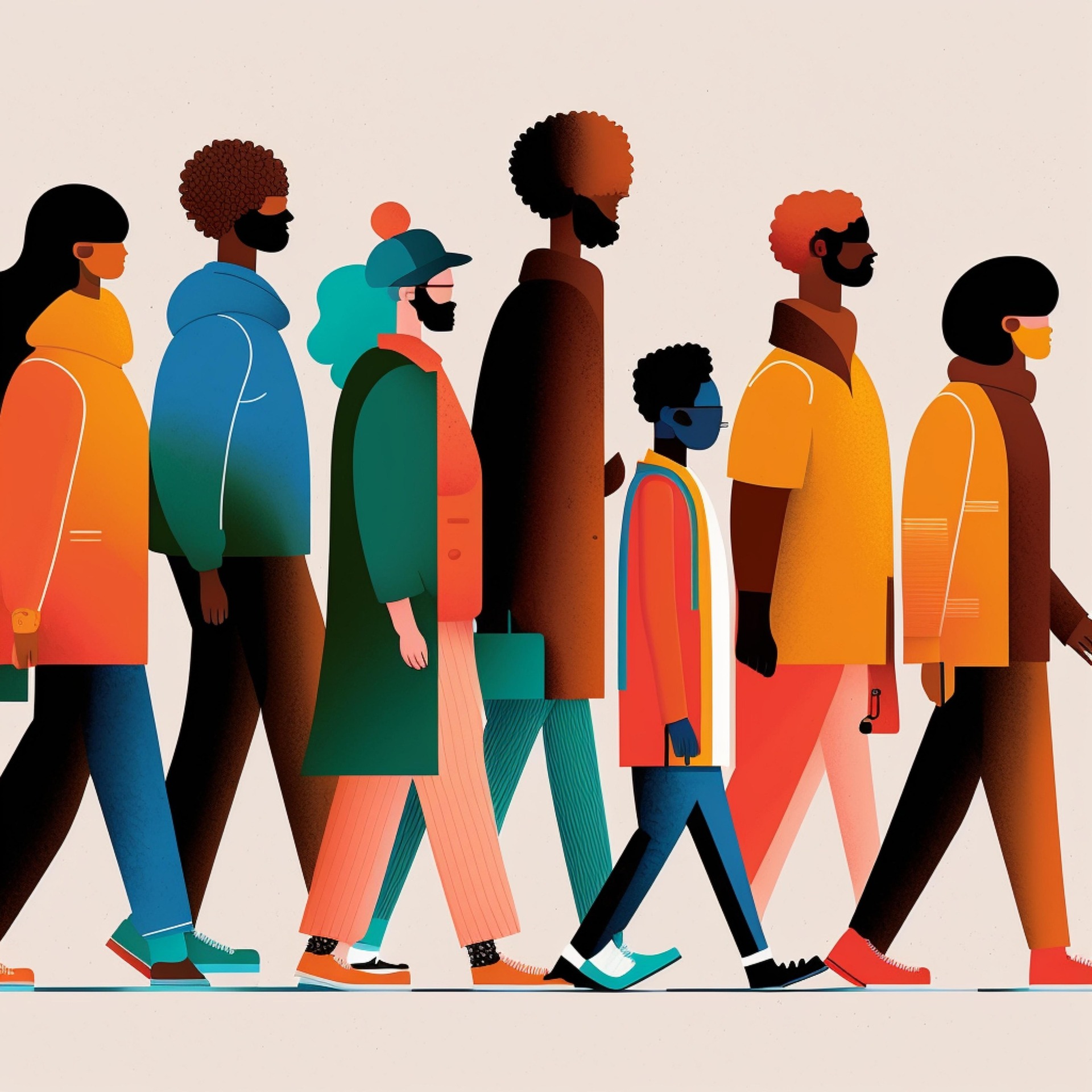
Equality has become one of the major globally debated topics in recent years, especially in discussions surrounding the LGBTQIA+ community and the continuing fight for rights, recognition, and safer spaces. From workplaces to educational institutions, various protective frameworks have been introduced. Many of these are closely associated with the Sexual Orientation and Gender Identity and Expression (SOGIE) Equality Bill.
First filed in 2000 and later passed by the Senate Committee on Women, Children, Family Relations, and Gender Equality in 2022, the bill primarily aims to address discriminatory practices and promote equal treatment across different sectors. With its anti-discrimination objective, the bill is frequently used as a foundation for advocacies centered on identity, inclusion, and equal protection. However, a significant aspect of the discussion often becomes overlooked — the complexity of how these principles are implemented across industries and institutional environments with fundamentally different objectives.
Given this, can a universal concept of equality truly be applied identically across all sectors? While anti-discrimination principles continue to gain recognition internationally, the greater challenge may not necessarily lie in defining equality itself, but in determining how it should be operationalized across institutions that function under different standards of fairness, safety, regulation, and responsibility.
Understanding the SOGIE Bill Beyond Surface-Level Definitions
The SOGIE Bill is a proposed Philippine measure designed to address and prevent systemic discrimination, particularly against members of the LGBTQIA+ community and other individuals who experience gender-based bias. It seeks to establish a legal framework that penalizes acts marginalizing individuals based on their sexual orientation, gender identity, gender expression, or sex characteristics (SOGIESC). At its core, the bill aims to strengthen human rights protections, prevent economic marginalization, promote public safety, and ensure equal institutional access across various sectors of society.
Under the proposed framework, discriminatory practices such as employment bias, the denial of educational opportunities, the refusal of services, harassment, abuse, and the discriminatory restriction or revocation of licenses and access would be strictly prohibited. Despite this clear scope, the bill is often misunderstood. While the measure is intended to protect all Filipinos—including heterosexual individuals—from gender-based discrimination, it does not automatically legalize same-sex marriage or civil unions. Neither does it create special rights or privileges exclusive to a particular group. Rather, the bill primarily seeks to protect existing constitutional rights from being denied or violated based on a person’s identity or expression.
Because the bill has yet to be formally enacted into law, many of its core principles are currently reflected in and supported by existing legislation, such as the Safe Spaces Act (Republic Act No. 11313) and the Labor Code of the Philippines. These laws already provide protections against various forms of discrimination and harassment affecting individuals across different genders and sectors. Republic Act No. 11313, in particular, criminalizes acts such as homophobic, transphobic, and sexist slurs when committed as forms of gender-based harassment in public spaces. Meanwhile, the Labor Code focuses on workplace protections, emphasizing that employment decisions involving compensation, promotion, and professional opportunities must not be determined solely based on sex or gender.
Equality in Principle vs Equality in Application
To understand why this topic sparks intense global debate across different cultures, it is best to examine the difference between formal equality (equality in principle) and substantive equality (equality in application).
Formal equality is best described as the “textbook” definition of equality. This framework focuses on procedural symmetry and executing laws exactly as they are written. Conversely, substantive equality demands that the actual real-world outcome of a policy’s application must turn out to be fair, recognizing that different groups face unique baselines.
In the corporate sector, the principles of formal and substantive equality do not clash; they operate in tandem to eliminate discrimination. Both models support hiring and paying individuals equally based on merit and skill rather than their social identity, as identity does not affect professional output. However, when translating these concepts to sectors like elite competitive sports and correctional facilities, a uniform, identity-blind model of equality becomes untenable.
In these spheres, the law must favor a model of substantive equality rooted in biological equity. To preserve competitive fairness and physical safety, the application of the law must explicitly account for immutable physical differences, recognizing that treating fundamentally different biological realities identically is, in itself, a form of discrimination. International discussions surrounding anti-discrimination frameworks, such as the SOGIE Bill, further demonstrate that equality is not always operationalized identically across all institutions. In specialized fields, organizations are frequently required to balance inclusion with other legitimate, sector-specific regulatory objectives.
The Challenge of Balancing Inclusion and Institutional Fairness
The elite competitive sports sector serves as a prime example of how anti-discrimination principles become highly complex during application. This complexity is frequently addressed within the regulatory frameworks of international sports organizations, such as the International Olympic Committee and World Athletics. The recurring nature of this topic—particularly during the Summer Olympics—regularly ignites intense public debate over whether competition remains genuinely fair for all athletes within a single division.
To navigate this, sports organizations strive to balance inclusion and equal participation with their other core objectives: competitive fairness, athlete safety, and biological classification. In practice, these institutions utilize eligibility standards—including medical, hormonal, and category-based criteria—to determine which divisions athletes may enter. Rather than functioning solely as restrictive measures, these policies serve as mechanisms intended to preserve competitive integrity while still attempting to accommodate broader principles of participation.
Ultimately, this athletic baseline demonstrates that practicing equality does not mean implementing identical rules across all institutional environments. In sectors like sports, where performance and physical categorization form the foundational operational structure, institutions must apply anti-discrimination principles alongside other regulatory metrics to maintain what officials determine to be a fair and balanced environment for all participating individuals.
International Frameworks and the Limits of Uniform Implementation
Anti-discrimination frameworks extend far beyond the Philippines, anchoring themselves in international human rights systems like the Universal Declaration of Human Rights and the International Covenant on Civil and Political Rights. These instruments emphasize equal protection and fundamental rights regardless of an individual’s status or identity. More specifically, the Yogyakarta Principles have significantly shaped global discourse regarding SOGIE protections and institutional obligations, while the ASEAN Human Rights Declaration reinforces these guarantees of human dignity and equality at the regional level.
Yet, despite these shared global values, actual implementation varies widely across jurisdictions based on domestic legal systems, regulatory priorities, and cultural contexts. The limits of a uniform, blanket implementation become obvious the moment universal anti-discrimination principles encounter institutions operating under a different set of regulatory objectives.
While sectors like employment and education focus heavily on equal access and accommodation, performance-regulated sectors like elite sports must balance these ideals against safety, biological classification, and competitive integrity. Consequently, bodies like the International Olympic Committee utilize specific medical, hormonal, and category-based eligibility standards. While continuously debated, these frameworks demonstrate that anti-discrimination is inherently context-dependent rather than identical across all institutional environments. Ultimately, the challenge lies not in recognizing equality as a legal principle, but in operationalizing it across institutions with fundamentally different societal functions and responsibilities.
The Real Challenge: Operationalizing Equality
Recognizing equality and codifying it into local and international policies is the straightforward part of the process. The true difficulty—and the area requiring deeper examination—lies in how these ideals are implemented institutionally across different sectors of society. Anti-discrimination laws cannot exist in a vacuum; they must be balanced alongside the unique compliance mechanisms, standards, and operational responsibilities that individual institutions hold.
The real-world application of equality becomes vastly more complex than the underlying principle the moment an institution must figure out how fairness, safety, accommodation, biological considerations, and equal access can coexist within its specific regulatory environment.
Consequently, the public discussion surrounding frameworks like the SOGIE Bill should extend beyond whether anti-discrimination protections should exist. Instead, the focus must shift to how these laws are applied across diverse institutions, adapting them to their distinct functions and objectives. While equality remains a universally recognized legal principle, its actual implementation is shaped by contextual realities that prevent a single, uniform standard from applying identically across all sectors of society.
Need guidance on SOGIE-related rights, workplace concerns, or anti-discrimination issues? STLAF assists individuals, employers, and institutions in navigating legal obligations, regulatory compliance, and dispute resolution involving equality, workplace policies, and emerging legal frameworks.
Disclaimer: The content of this blog is intended for general informational and educational purposes only and does not constitute legal advice. Laws and regulations may vary by jurisdiction, and the applicability of the information herein may differ depending on specific facts and circumstances. Accessing or reading this content does not create an attorney–client relationship. For legal concerns or tailored guidance, please consult a qualified lawyer licensed in your jurisdiction.
Whether you are based in the Philippines or overseas, STLAF offers legal services to both local and international clients. Our team is equipped to assist with cross-border matters, provide jurisdiction-specific guidance, and help you navigate complex legal challenges with confidence.
To read more STLAF legal tidbits, visit https://stlaf.global/bits-of-law.
For comments, suggestions, and inquiries, email legal@sadsadtamesislaw.com.
Author(s): Juliana Sales